

TRCG | ComplAInts
Let the system prepare the assessment. Let your team manage the exceptions.
Complaint handling takes more than recording an event. Someone has to review the information, apply the procedures, assess risk and reportability, connect the evidence, and document the reasoning.
ComplAInts is being developed to prepare that work using your approved framework—so your team can focus on missing information, conflicting evidence, investigation needs, and decisions requiring human authority.
The goal: handle the workload with less repetitive effort and a more consistent basis for every assessment.
Put staff time where judgment matters.
Searching documents, drafting recurring justifications, and linking supporting evidence can consume time your team needs for investigations, difficult cases, and quality improvements.
ComplAInts is designed to prepare those assessment elements and surface the issues that need intervention. That creates a practical opportunity to lower handling costs and manage workload without adding the same amount of staff effort.
Build consistency into the assessment.
Different reviewers should not have to reconstruct the decision framework each time a complaint arrives.
ComplAInts applies configured procedures and risk criteria, links the supporting information, and preserves documented reviewer changes. The aim is to reduce avoidable variation and gaps in the reasoning—supporting records your team can explain under audit.
See complaint handling by exception.
Watch how prepared assessments, targeted review tasks, and supporting evidence come together in the workspace.
Demonstration uses a fictitious manufacturer and synthetic complaint records.
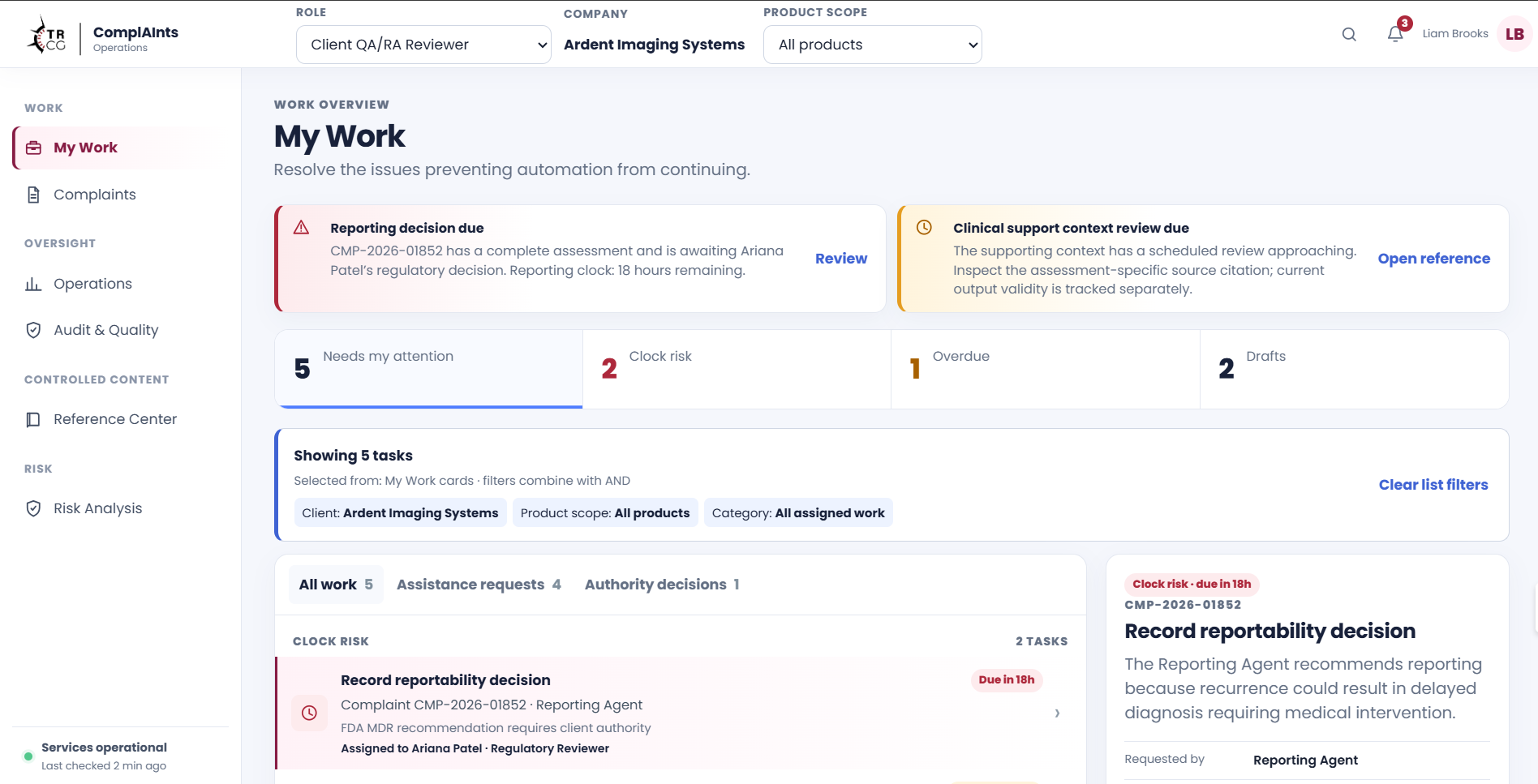
Start with the work that needs a person.
An unrecognized product version. Clinical information that does not match the assessment. A reporting recommendation awaiting an authorized decision.
The worklist identifies the issue, assigns responsibility, and shows what it is holding up. Your team can act on the exception instead of searching every record to discover what needs attention.
See the issue, the owner, and the next action.
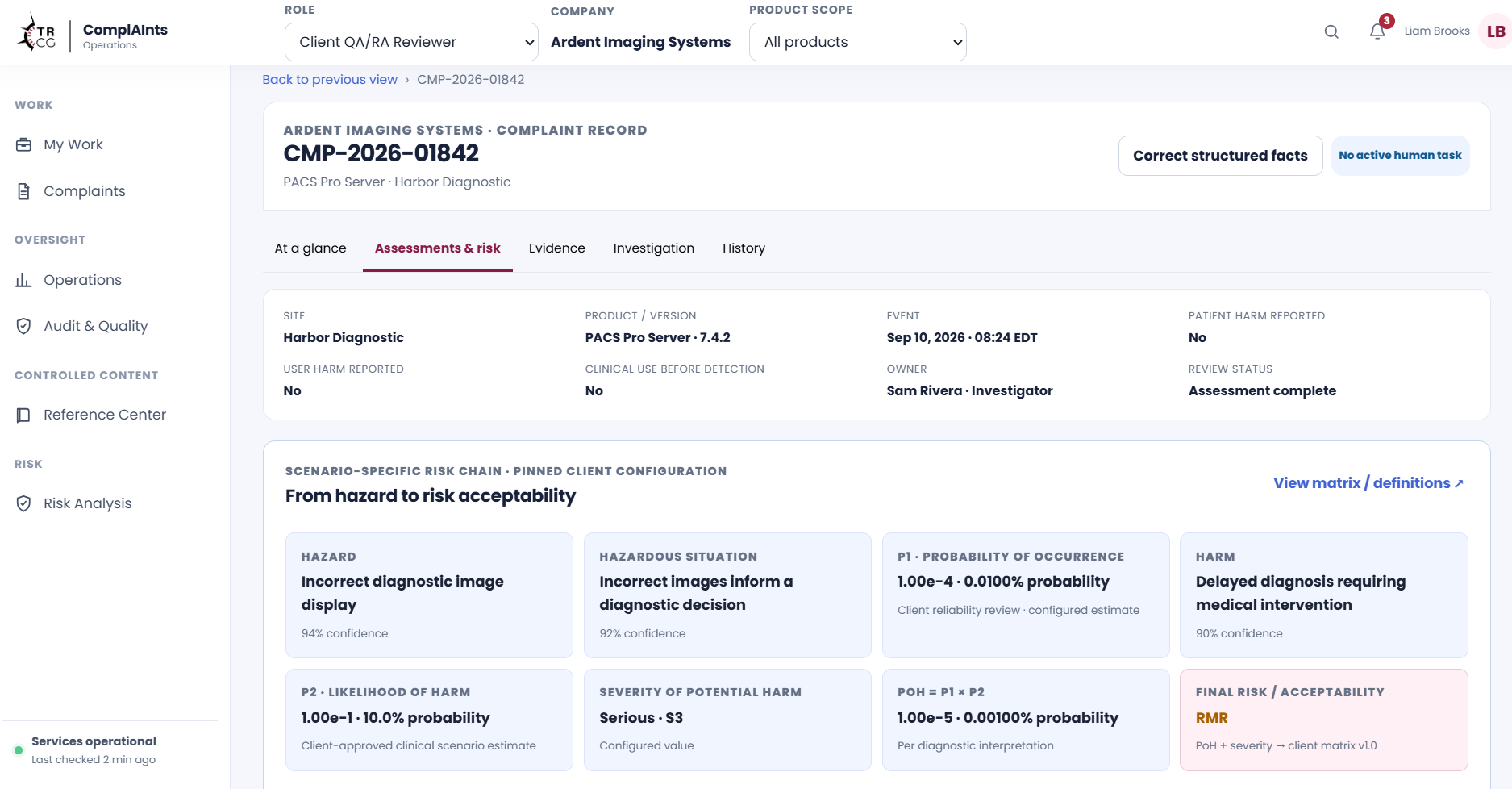
Review an assessment that has already been prepared.
ComplAInts uses the complaint information and configured framework to draft assessments, supporting justifications, and links to relevant evidence.
Reviewers can examine the proposed risk scenario and its supporting context, correct information, or request reassessment when the facts change. The starting point is prepared work that can be inspected and challenged.
Connect the event to the risk reasoning and evidence behind the recommendation.
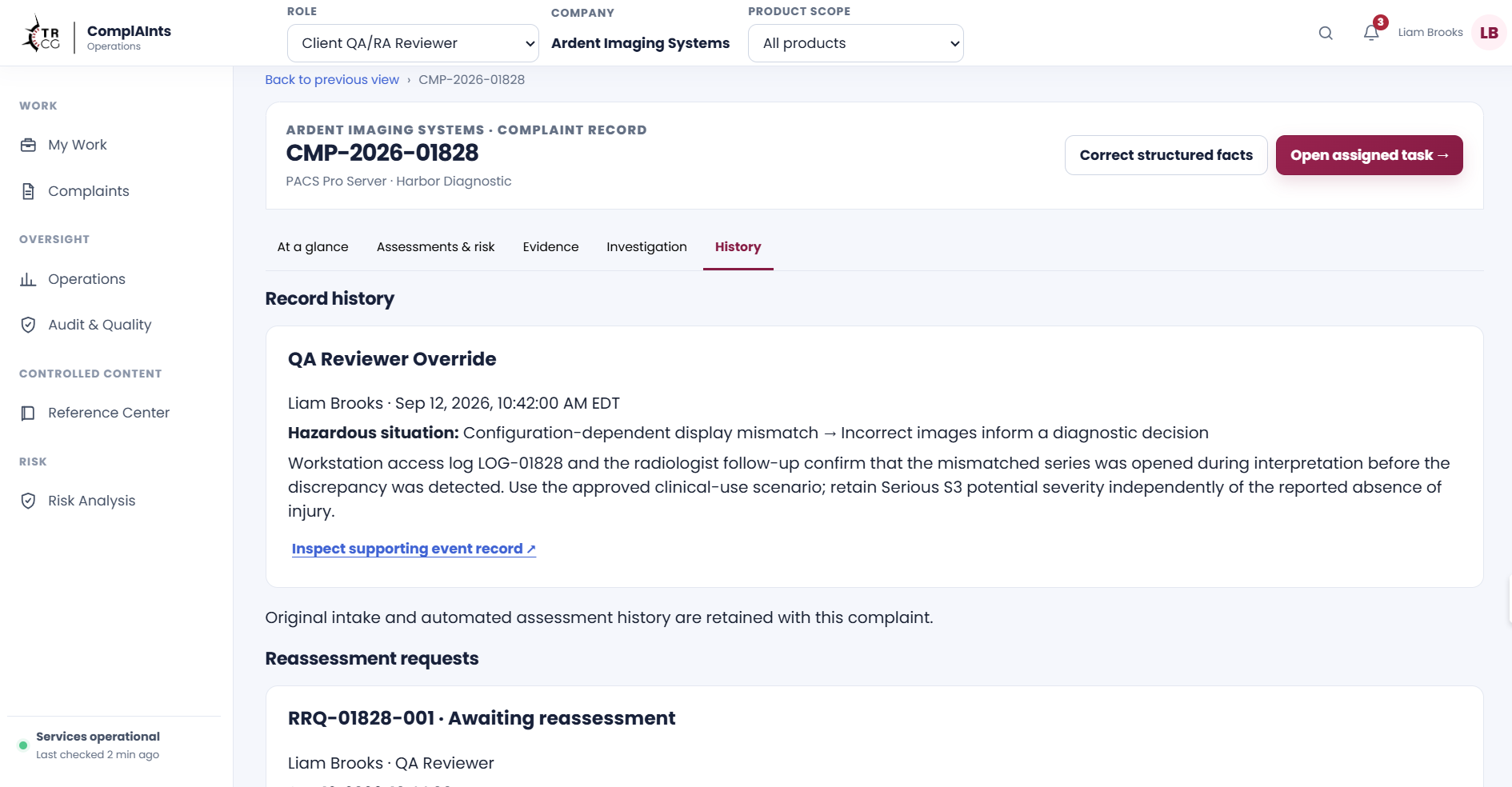
Keep human judgment—and the reasoning behind it—visible.
Managing by exception requires meaningful control over the result.
Reviewers can revise an assessment, document their rationale, and request reassessment. The record retains who changed it, when, and the supporting information, alongside the earlier assessment history.
Preserve the explanation, not just the final answer.

Consistent automation starts with an agreed framework.
During configuration, TRCG works with your team to establish the procedures, product information, risk logic, clinical evidence support, and review responsibilities that guide complaint assessment.
That maintained framework is part of the ComplAInts offering. It gives the automation a defined basis for preparing work and identifying when a case needs further attention.
Your team retains manufacturer accountability, with review and approval requirements established for the agreed workflow.
Can your team spend less time processing complaints?
We’re seeking two to three PACS manufacturers to evaluate ComplAInts against real complaint-handling needs.
Together, we’ll define the scope and evaluate the measures that matter: staff time per complaint, assessment consistency, reviewer corrections, and completeness of supporting rationale.
Tell us where your team spends the most time—and where assessments create the most rework.